
AI tools are changing the way people work, create content, research information and manage everyday digital tasks. From writing and image creation to productivity and SEO, the right tools can save time and make complicated tasks easier.
But what exactly are its tools and how can you choose the right AI solution for your needs?
In this guide, we explore its tools in a practical way, explain the main categories of AI tools, and show how businesses, marketers, students and content creators can use them effectively.
Whether you are based in the UK, USA or elsewhere, understanding how AI tools work can help you make better decisions and improve your digital workflow.
Table of Contents
What Are Its Tools?
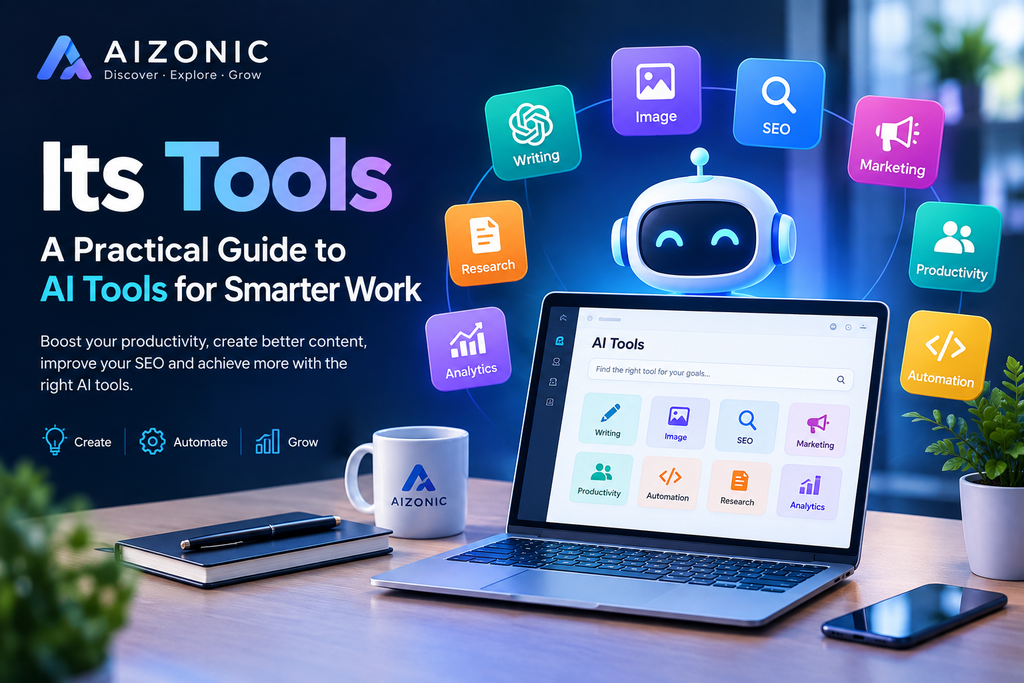
The phrase its tools can refer to a collection of digital or AI-powered tools designed to help users complete specific tasks more efficiently.
Modern AI platforms can combine different capabilities in one place. Instead of switching between many applications, users may be able to use AI for writing, research, content creation, productivity, SEO and other digital activities.
Common examples include:
- AI writing tools
- AI image generators
- AI research tools
- SEO tools
- Content optimisation tools
- Productivity assistants
- Marketing tools
- AI automation tools
- Data analysis tools
- Coding assistants
The best tool depends on what you want to accomplish.
Why Are Its Tools Useful?
AI tools can support people with repetitive, time-consuming or creative tasks. They are particularly useful when you need to produce an initial draft, organise information or explore ideas quickly.
1. Save Time
AI can help with tasks such as creating outlines, summarising information, generating ideas and organising content.
For example, a digital marketer can use an AI tool to create a first draft of a blog structure before improving it manually.
2. Improve Productivity
Instead of starting every task from scratch, AI can provide suggestions and working drafts that users can edit and refine.
This can be useful for:
- Content planning
- Social media ideas
- Email drafts
- Research
- Keyword organisation
- Business brainstorming
3. Support Content Creation
Content creators can use AI tools to generate ideas for blog posts, social media content, video concepts and visual assets.
However, AI-generated content should always be reviewed before publishing. Human editing, fact-checking and expertise remain important.
4. Help With SEO
AI tools can support SEO workflows by helping users organise keywords, create content outlines, identify search intent and improve readability.
They should be used as assistants rather than replacements for proper SEO research and human judgement.
Types of AI Tools You Can Use
Different tools are designed for different jobs. Understanding the categories makes it easier to choose the right solution.
AI Writing Tools
AI writing tools can help create:
- Blog outlines
- Article drafts
- Product descriptions
- Social media captions
- Email drafts
- Website copy
A good workflow is to use AI for the initial draft and then add your own expertise, examples and opinions.
AI Image Tools
AI image tools can generate visual concepts from text prompts.
They can be useful for:
- Blog featured images
- Social media graphics
- Marketing concepts
- Website visuals
- Creative ideas
For business websites, always check that images are suitable for commercial use and follow the relevant platform’s terms.
AI SEO Tools
SEO-focused AI tools can assist with tasks such as:
- Keyword research
- Search intent analysis
- Content briefs
- Meta title ideas
- Meta descriptions
- Content optimisation
- Topic research
AI should complement traditional SEO tools and search-engine data rather than being the only source of keyword decisions.
AI Productivity Tools
Productivity-focused tools can help users organise information, generate plans and automate repetitive activities.
For example, a business owner could use AI to turn rough notes into an organised task list.
How to Choose the Right AI Tool
Choosing an AI tool should start with your goal rather than the tool’s popularity.
Ask yourself:
- What task do I need to complete?
- How frequently will I use the tool?
- Do I need text, images, research, SEO or automation?
- Does the tool provide the features I actually need?
- Is the pricing suitable for my budget?
- Does it offer appropriate privacy and data controls?
- Can I easily review and edit its output?
Example
Imagine you want to create an SEO blog post.
You may need several capabilities:
Step 1: Research the topic and search intent.
Step 2: Identify useful keywords.
Step 3: Create a content outline.
Step 4: Write and edit the article.
Step 5: Create a suitable featured image.
Step 6: Optimise the title, URL, headings and meta description.
Rather than choosing an AI tool simply because it has many features, select tools that fit these specific requirements.
AI Tools for Digital Marketing
Digital marketers can use AI across several areas of their workflow.
SEO
AI can help generate content ideas, organise keyword themes and create optimisation suggestions.
Social Media Marketing
Marketers can use AI to brainstorm:
- Facebook posts
- Instagram captions
- LinkedIn content
- TikTok ideas
- Content calendars
Content Marketing
AI can help transform one idea into different content formats.
For example, a blog topic could become a social media post, short video idea, email concept and infographic outline.
Website Content
AI can assist with service pages, FAQs, landing-page ideas and product descriptions.
The final content should still reflect the business’s real services, expertise and target audience.
Best Practices When Using AI Tools
Using AI effectively requires more than entering a short prompt and publishing the result.
Give Clear Instructions
A detailed prompt usually provides more useful output.
Instead of:
Write a blog.
Try:
Create a UK English SEO article for beginners about AI tools, with practical examples, clear H2 and H3 headings, FAQs and a concise conclusion.
Check the Information
AI can sometimes produce incorrect, outdated or incomplete information.
Always verify important facts before publishing or using them professionally.
Add Human Experience
Your own knowledge makes content more useful.
Add:
- Real examples
- Personal experience
- Original insights
- Practical steps
- Relevant screenshots
- Expert opinions
Avoid Keyword Stuffing
SEO content should be written naturally.
Use your focus keyword where it makes sense, but do not repeat it unnecessarily. Search engines and readers both benefit from clear, useful writing.
Are AI Tools a Replacement for Humans?
AI tools are powerful assistants, but they are not a complete replacement for human judgement.
A human should decide:
- What the audience actually needs
- Which information is trustworthy
- Whether an idea makes business sense
- Which content should be published
- How the final message should sound
The strongest approach is usually human expertise + AI assistance.
How Aizonic Can Help You Explore AI Tools
Aizonic is focused on helping users discover and understand AI tools that can support modern digital work.
Whether you are interested in content creation, SEO, productivity or other AI applications, exploring different tools can help you identify better ways to complete everyday tasks.
Start by identifying one problem you want to solve, then choose a tool that directly addresses that problem.
Frequently Asked Questions
What are its tools?
Its tools can refer to a collection of digital or AI-powered tools designed to help users complete tasks such as writing, research, SEO, image creation, productivity and marketing.
Which AI tool should beginners use?
Beginners should start with a tool that solves a specific problem they regularly face. For example, a content creator may start with an AI writing tool, while a marketer may need an SEO or content-planning solution.
Can AI tools help with SEO?
Yes. AI can assist with keyword organisation, search intent, content planning, optimisation ideas, meta descriptions and other SEO tasks. Human review and proper SEO research are still important.
Are AI-generated articles ready to publish?
Not always. AI-generated content should be reviewed, fact-checked, edited and improved with useful information and original insights before publication.
Can businesses use AI tools?
Yes. Businesses can use AI for marketing content creation customer-support workflows research productivity and many other tasks depending on their needs and the tool’s capabilities.
How do I choose the best AI tool?
Start with your objective. Define the task compare relevant features, check pricing and privacy information, and test whether the tool produces useful results for your particular workflow.
Conclusion
AI tools are becoming an important part of modern digital work. From SEO and content creation to productivity and marketing they can help users work more efficiently when used correctly.
The key is not to use every available AI tool. Instead, identify your goal choose the right solution and combine AI assistance with human knowledge and careful review.
Explore the world of its tools with Aizonic and discover practical ways AI can support your digital workflow.