
QR codes have quietly become one of the most used pieces of technology in everyday life. From restaurant menus to payment links, event tickets, and product packaging, that small black and white square is everywhere. But not everyone searching for random qr code wants the same thing. Some people are looking for a QR code generator that creates a unique non repeating code for testing or fun. Others are trying to understand what happens when you scan an unknown QR code found somewhere unexpected. Some just want a quick way to generate a placeholder QR code for a design mockup app testing or a prank.
This guide covers all of these angles in one place. Whether you landed here because you want to generate a random QR code right now you are curious about the safety of scanning unfamiliar codes or you simply want to understand how QR codes work under the hood you will find a clear practical answer below.
Table of Contents
What Is a Random QR Code
A random QR code is a QR code that has been generated without a specific meaningful destination in mind or one where the content is scrambled randomized or unknown to the person viewing it. This is different from a standard QR code which is intentionally created to link to a website a Wi-Fi network a contact card or a piece of text that the creator wants people to access.
There are actually a few different situations where the phrase random qr code applies. The first is when someone wants to generate a QR code that encodes random or placeholder data often used by developers designers or testers who need sample QR codes without linking to anything sensitive. The second situation is when someone finds a QR code in public on a sticker flyer or package with no label explaining what it does, and they refer to it as a random QR code because its purpose is unclear. The third is a more playful use case where people generate random QR codes for games scavenger hunts, social experiments, or novelty gifts.
Understanding which of these situations applies to your search is the first step to getting the right kind of help, and this article is structured to address each of them clearly.
Why People Search For Random QR Code
The search term random qr code spikes for a mix of curiosity, caution, and creativity. Some searches come from people who literally want a tool that spits out a random code for testing purposes such as app developers checking how their QR scanner handles arbitrary input or students working on a coding project that involves QR generation.
Other searches come from a place of caution. Someone spots a QR code stuck on a lamppost, left on their windshield or included in an unsolicited text message and instinctively searches to understand what a random QR code might do before scanning it. This is a smart instinct because QR codes can be used maliciously and knowing the risks before scanning anything unfamiliar is genuinely good practice in today’s digital environment.
There is also a creative and social angle. Random QR codes are used in party games escape rooms, marketing stunts and even art installations where scanning a code reveals a surprise message song, or interactive experience. People search for tools that let them create these random or mystery codes quickly without needing design software or technical skills.
How QR Codes Actually Work
A QR code, short for Quick Response code, is a two dimensional barcode that stores data in a grid of black and white squares. Unlike a traditional barcode that only reads left to right, a QR code stores information both horizontally and vertically, which allows it to hold far more data in a small space. This data can be a website URL, plain text, contact details, Wi-Fi credentials, payment information, or even a random string of characters with no real-world meaning at all.
When you scan a QR code with your phone camera or a dedicated scanner app, the device reads the pattern of squares and decodes it back into the original information. The process happens in a fraction of a second which is why QR codes feel almost instantaneous compared to typing a long URL manually. This speed and convenience is exactly why businesses event organizers and everyday users have adopted QR codes so widely over the past several years.
It is worth noting that a QR code itself is just a container for data. It does not inherently know or care whether that data is a legitimate website, a harmless random string, or something malicious. That responsibility falls on whoever generates the code and to some extent whoever scans it without verifying the source first.
Is Scanning a Random QR Code Safe
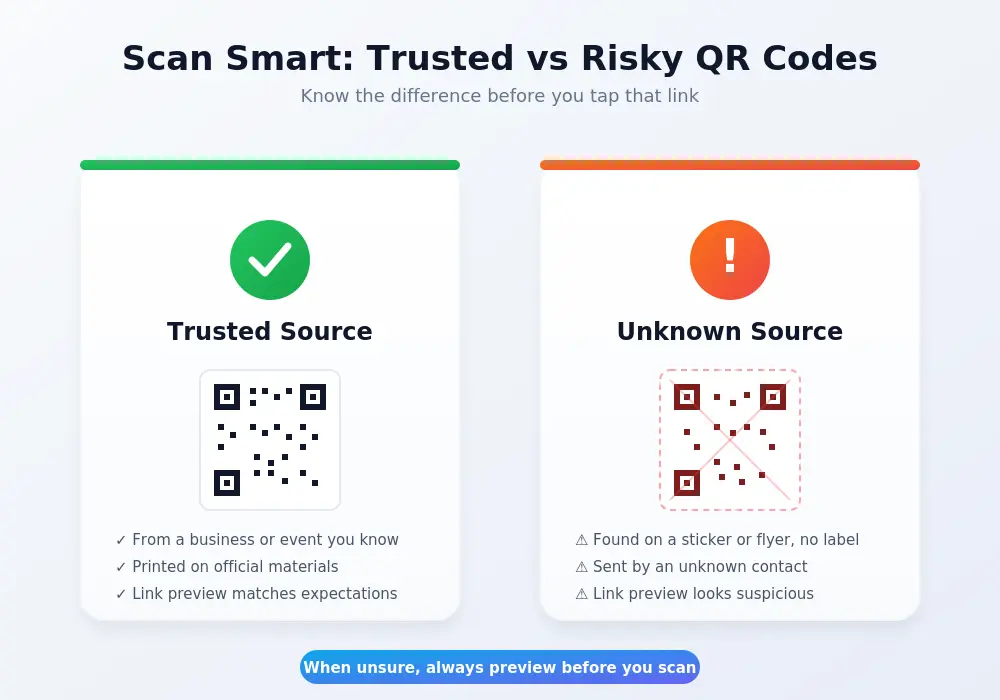
This is one of the most common concerns behind this search term and it deserves a direct answer. Scanning a QR code from a source you trust, such as a menu at a restaurant you are sitting in or a code printed on your own event ticket, is generally safe. The risk increases significantly when the code appears in an unexpected place with no context such as a sticker placed over a legitimate parking meter cod, a flyer left on your car or a QR code sent to you by an unknown contact.
Malicious actors sometimes use QR codes to redirect people to phishing websites designed to steal login credentials or to trigger unwanted downloads. This tactic even has a name in cybersecurity circles quishing a play on the word phishing. Because QR codes hide the actual destination URL until after you scan them they can be used to disguise a harmful link in a way that a normal visible hyperlink cannot.
A good rule of thumb is to preview the link before opening it fully. Most modern phone cameras show a preview of the destination URL before you tap to open it. If that link looks suspicious misspelled or unrelated to the context where you found the code, it is best not to proceed. Sticking to QR codes from verified trusted sources and being cautious about codes found in random public places is the safest approach.
Random QR Code Generators for Testing and Development
For developers, students, and QA testers, a random QR code generator is a genuinely useful tool. When building or testing an application that scans QR codes, it is often necessary to generate a batch of codes with varying content lengths and formats to confirm the scanner works reliably across different scenarios. Rather than manually typing out dozens of test strings, a random QR code generator can automate this process in seconds.
These generators typically allow you to choose the type of data encoded whether that is random alphanumeric text a randomly generated URL structure, or even random numeric values for inventory and asset-tracking simulations. Some advanced tools also let you control the size error correction level and color scheme of the generated code which is helpful for testing how well a scanner performs under different visual conditions such as low contrast or small print sizes.
Beyond software testing random QR codes are also popular in educational settings. Teachers sometimes use randomly generated codes as part of classroom games, where scanning a code reveals a random question task or reward. This gamifies learning in a way that keeps students engaged while also introducing them to how QR technology works in a hands-on, practical way.
Random QR Code Ideas for Games and Creative Projects
Beyond testing and safety concerns plenty of people search for random QR codes purely for fun. Scavenger hunts are a popular use case where organizers hide printed QR codes around a location, and each code reveals a clue a random challenge or a piece of a larger puzzle when scanned. This works well for birthday parties corporate team-building events, and school activities because it blends physical movement with a digital reveal that feels exciting and modern.
Wedding and party favors are another creative use. Some hosts generate random QR codes that link to a personalized message, a funny video or a shared photo album, turning a simple sticker or card into an interactive surprise for guests. Because generating a QR code is fast and free with the right tool this kind of personalization does not require any special design skill or budget.
Artists and marketers have also experimented with random QR codes as part of larger installations or ad campaigns, where the mystery of not knowing what the code leads to becomes part of the appeal. This taps into natural curiosity encouraging more people to scan the code simply because they do not know what to expect which can drive higher engagement than a QR code that plainly states its purpose in advance.
Latest Update on QR Code Trends
QR code usage has continued climbing steadily driven largely by contactless payments digital menus, and event ticketing that became standard practice in recent years. Mobile operating systems have also made scanning easier than ever by building QR recognition directly into the native camera app removing the need for a separate scanner app entirely. This native integration has made QR codes feel like a built-in part of the smartphone experience rather than a niche feature.
On the security side awareness around quishing attacks has grown, and both browsers and phone manufacturers have started adding warning prompts when a scanned QR code leads to a suspicious or newly registered domain. This is a positive development for anyone who searches for random QR code out of caution, since the technology itself is slowly catching up to address the exact concern that brought many users to this topic in the first place.
Design trends have also shifted, with more businesses opting for custom-colored and branded QR codes that include a logo in the center rather than the plain black and white grid most people associate with the format. This makes codes more recognizable and trustworthy at a glance, since a branded code signals it was created intentionally by a known business rather than being an anonymous, potentially random or unverified code.
Reviews of Popular QR Code Generator Tools
When comparing QR code generator tools available online, the differences usually come down to speed, customization, and whether the generated code is static or dynamic. Static codes encode the final data permanently, meaning the destination cannot be changed later without generating a brand new code. Dynamic codes, on the other hand, link to a redirect that can be updated after the code has already been printed or distributed, which is useful for businesses that may need to change a linked webpage in the future.
Free generators are widely available and cover the needs of most casual users, offering instant code creation for URLs, text, contact cards, and Wi-Fi credentials without requiring an account. Paid or premium tools tend to add analytics, letting businesses track how many times a code was scanned, from what location, and on what device, which is valuable for marketing campaigns that rely on QR codes as a call to action.
For most everyday needs, including generating a quick random QR code for testing, fun, or a one-off project, a free and straightforward generator is more than sufficient. The key things to look for are speed, no unnecessary account requirements, and the ability to download the code in a usable image format for printing or sharing digitally.
Who Uses Random QR Code Generators
A wide range of people rely on random or general-purpose QR code generators, and understanding these use cases helps clarify why this keyword sees consistent search interest. Small business owners use them to quickly create codes linking to their menus, product pages, or social media profiles without hiring a designer. Event planners use them for digital tickets and check-in systems that speed up entry lines significantly compared to manual checks.
Developers and QA engineers use random data generation specifically to stress-test scanning applications, ensuring their software handles edge cases like unusually long strings or special characters gracefully. Teachers and event hosts use them for the interactive and gamified experiences described earlier, turning a simple scan into a moment of engagement or surprise.
Even individual hobbyists use QR code generators for personal projects, such as putting a code on a resume that links to an online portfolio, embedding one in a wedding invitation, or creating a fun random code just to see what kind of pattern is generated. This broad range of users is exactly why a flexible, easy-to-use generator tool has such wide appeal.
Why Is This Keyword Trending
Search interest around QR codes in general has remained consistently high because the technology sits at the intersection of convenience and curiosity. As more physical spaces, from restaurants to retail stores to public transportation, adopt QR-based systems for menus, payments, and information, more people encounter unfamiliar codes and want quick answers about what they are and how to interact with them safely.
The “random” angle specifically trends because it captures two very different audiences with one search term: people who want a randomization tool for practical or creative purposes, and people who are cautious about a specific code they encountered and want to understand the risks before scanning. This dual intent makes the keyword valuable and consistently searched, since both audiences are actively looking for clear, trustworthy information rather than technical jargon.
Additionally, as QR-based scams have received more media coverage, general awareness has increased, prompting more people to research QR code safety proactively rather than after an incident occurs. This shift toward prevention rather than reaction is a meaningful trend that continues to drive searches like this one.
How to Generate Your Own Random QR Code in Seconds
If your goal is simply to create a QR code right now, whether for testing, a creative project, or a quick practical need, the process is genuinely simple with the right tool. You do not need design software, coding knowledge, or a paid subscription to get a clean, scannable QR code in seconds.
Start by deciding what you want the code to contain. This could be a plain block of random text, a link to a specific webpage, contact information, or even Wi-Fi login details if you are creating something for guests at home or in an office. Once you know the content, a good generator tool will let you paste that information in, customize the appearance if needed, and instantly produce a downloadable image file ready to print or share digitally.
For a fast, free, and reliable option, you can use our own QR Code Generator tool, built specifically to make this process effortless. It requires no signup, works directly in your browser, and lets you generate a clean, high-quality QR code in just a few clicks, whether you need it for testing, a fun project, or a real business use case.
Try our free Random QR Code Generator here
It is fast free to use and gives you a downloadable QR code instantly without any technical setup required.
Frequently Asked Questions
What does a random QR code mean?
A random QR code refers to a QR code generated without a specific, predetermined destination, or one whose content is unknown to the person viewing it. It can also describe a randomized test code used by developers, or a mystery code used for games and creative projects.
Is it safe to scan a random QR code found in public?
It depends heavily on where the code was found and whether the source is trustworthy. Codes from verified businesses or events are generally safe, while codes found unexpectedly in public places with no context carry a higher risk and should be approached with caution.
Can a QR code contain a virus?
A QR code itself cannot contain a virus, since it only stores data such as text or a link. However, scanning a malicious code can direct you to a website designed to install malware or steal personal information, so caution is still important.
How do I generate a random QR code for free?
You can use a free online QR code generator tool, enter the text, link, or data you want encoded, and download the generated image instantly without needing to create an account.
Do QR codes expire?
Static QR codes never expire, since the data is embedded directly into the code itself. Dynamic QR codes can technically stop working if the service managing the redirect is discontinued, so it is worth checking whether a generator produces static or dynamic codes.
Can I customize the design of a random QR code?
Yes most modern QR code generators allow you to change colors, add a logo in the center, and adjust the shape of the pattern squares, as long as the core scanning pattern remains intact for reliable readability.
Why do some QR codes look different from others?
Differences in size, color, and error correction level affect the visual pattern of a QR code. Codes with higher error correction can sustain more visual damage or decoration while still remaining scannable, which explains why some codes look more intricate than others.
What should I do if a QR code does not scan properly?
Try adjusting the lighting, holding your camera steady, and ensuring the entire code is visible within the frame. If it still fails, the code may be damaged, poorly printed, or generated with an unsupported format, in which case requesting a new code from the source is the best option.
Conclusion
Random QR codes sit at an interesting crossroads of curiosity, caution, and creativity which is exactly why so many people search for this term with very different intentions in mind. Whether you came here to understand the safety risks of an unfamiliar code to find a fast tool for generating your own random QR code, or simply to learn how this technology works, the core takeaway is the same: QR codes are a convenient, powerful tool as long as they are used thoughtfully. Stick to trusted sources when scanning, use reliable tools when generating, and you will get the full benefit of this technology without unnecessary risk. If you need to create one right now, our free QR Code Generator tool is ready whenever you are.